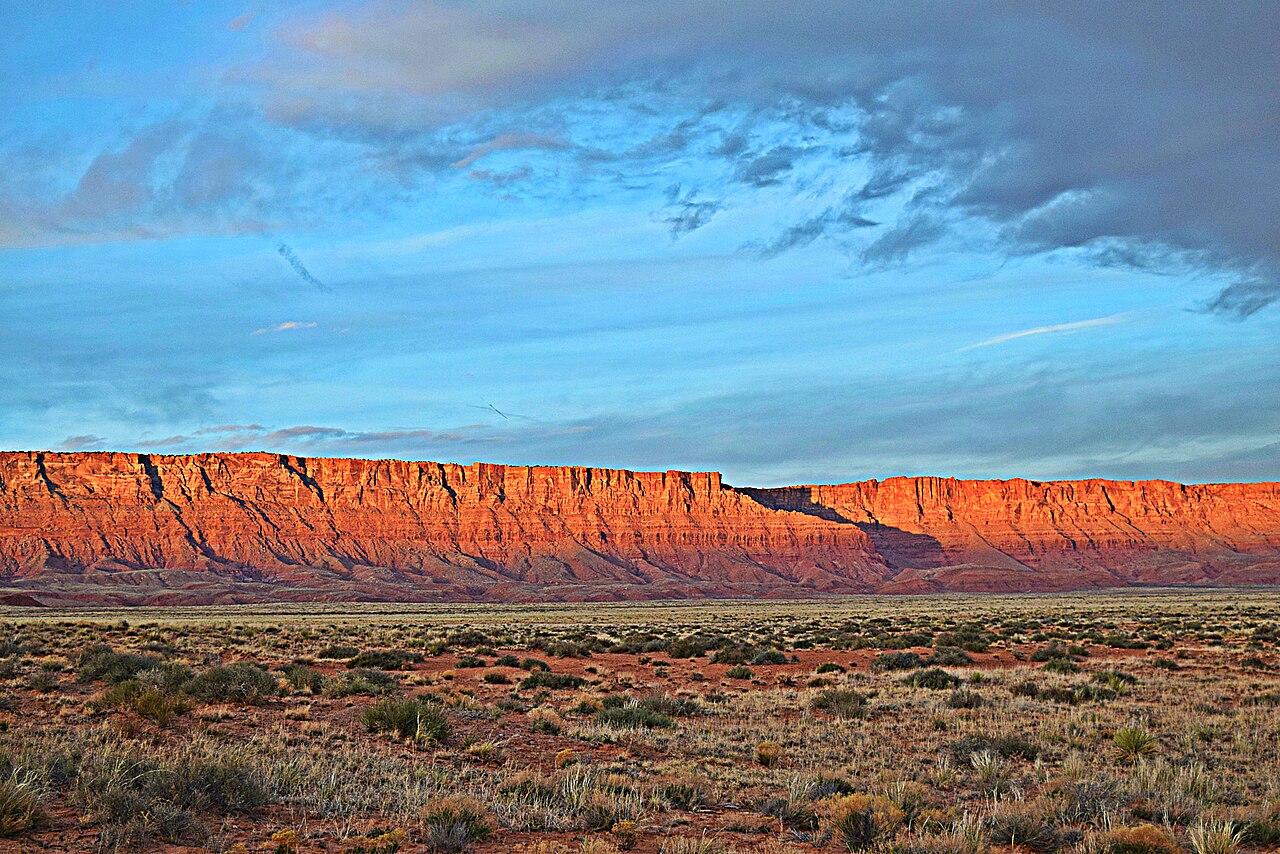
Vermilion Cliffs National Monument
Wild country west of Page
⏱ Half day to full day👤 All agesFree
Get Tickets
Get Vermilion Cliffs Tickets
Skip the line · mobile tickets accepted at the door
The monument's character is remoteness. The Bureau of Land Management notes there are no visitor centers inside it, so maps come from the Paria Contact Station, the Kanab Visitor Center or the interagency office in St. George, Utah. Roads are rough: House Rock Valley Road is maintained dirt that may be impassable when wet, and other tracks generally require four-wheel drive and high clearance because of deep sand. Hazards include flash floods, extreme heat, venomous reptiles and unmarked routes, so carry a full-size spare, plenty of water, food and fuel, and tell someone your plans.
Permits are required for Coyote Buttes North, which includes The Wave, Coyote Buttes South and overnight trips in Paria Canyon. Those have their own entries on this site, because they are distinct, competitive experiences. For most visitors, the easy way in is to drive US 89A past the cliffs, stop at the Condor Viewing Site and enjoy the view of the Vermilion Cliffs rising above the highway. Condors are most visible when they use the thermals, and rangers or volunteers sometimes help visitors spot them; bring binoculars and patience. Camping options include two developed campgrounds outside the monument, Stateline and White House, as well as dispersed camping in disturbed areas.
If you are staying in Page, this makes a good half-day or full-day drive combined with Navajo Bridge, Lees Ferry and the North Rim route. Go with a realistic plan: pick one or two stops, check road conditions, and leave early. Photographers love the cliffs at golden hour, when the color deepens to the tone that gave the monument its name. If you want a guided way into the backcountry, the White Pocket 4x4 tour on this site is the practical option. For a free, scenic introduction to the monument's scale, a drive, a condor stop and a picnic is a good day. A last practical suggestion: choose your stops before you leave Page and tell someone where you are going. Cell coverage is limited, distances are longer than they look on a map, and the best light comes late in the day when you may be tired. Bring a paper map, binoculars, a camera with a zoom and a sense of humor about dust. A day spent here makes the busier Page attractions feel even more distinct, and gives you a measure of how big this country really is.
What to Expect
Format
A drive-and-explore visit to a vast wilderness monument west of Page, with condor viewing and access to permit-only hikes elsewhere on this site.
Best Time
Spring and fall for comfortable temperatures; summer is hot and storms can flood washes and roads.
Duration
A half day for the highway and condor stops; longer for backcountry exploration.
Tips
Carry water, food, fuel and a full-size spare; check road conditions before you leave; bring binoculars for condors; remember there are no visitor centers inside the monument.
⚡ Quick Picks
Best For
Drivers, photographers and wildlife fans who like remote landscapes.
Families
Best as a drive with condor stops; backcountry roads are rough.
Couples
Golden-hour views and a quiet picnic away from the crowds.
Pair With
Navajo Bridge, Lees Ferry, White Pocket or the Grand Canyon North Rim.
Time Needed
Half a day or more.
Ready to book Vermilion Cliffs?
Get Tickets →Frequently Asked Questions
Do I need a permit?
Not for the highway and condor stops; permits are required for Coyote Buttes North, Coyote Buttes South and overnight Paria Canyon trips.
Can I see California condors?
Often, yes. Captive-bred condors are released here each year; bring binoculars and be patient.
Are the roads paved?
There are no paved roads inside the monument; House Rock Valley Road is maintained dirt that can be impassable when wet.
Is there a visitor center?
Not inside the monument; maps are at the Paria Contact Station, Kanab Visitor Center and the St. George interagency office.
Where can I camp?
Stateline and White House campgrounds lie outside the monument, and dispersed camping is allowed in previously disturbed areas outside the wilderness.
More Antelope Canyon Attractions
Browse all →
The Wave (Coyote Buttes North)
The most famous permit in American hiking — swirling bands of red and cream sandstone frozen mid-surge in the Vermilion Cliffs wilderness. Win the lottery, follow the route across open slickrock, and stand inside the photograph.

Navajo Bridge and Interpretive Center
Walk the 1929 steel arch 467 feet above the Colorado in Marble Canyon, watch for wild California condors riding the updrafts, and browse Navajo vendors' jewelry — the free, unmissable stop on the road to Lees Ferry.
White Pocket 4x4 Tour
The Wave's no-lottery rival — a remote plateau of white-capped, red-swirled brain rock deep in the Vermilion Cliffs, reached only by deep-sand 4x4 tracks. Go with a Page-based guide and spend the afternoon inside a dreamscape.